
Clients ask the same question your engineers do
Every client now asks whether AI makes your team faster and cheaper. "Yes" without numbers is a discount waiting to happen. The research says output rises and review queues, pull-request size and incidents rise with it — Faros AI measured 98% more pull requests and 91% longer review time in high-adoption teams, and DORA 2025 ties AI adoption to higher delivery instability.
What wins the conversation is your own data: lead time per project, change failure rate per service, and how much of each sprint was feature work rather than rework.
Flow: per project, per team
Lead time for changes and deployment frequency per repository and per team — which projects flow and which wait, and where: review, CI, handovers to the client's side. The sprint report arrives every sprint without anyone compiling it.
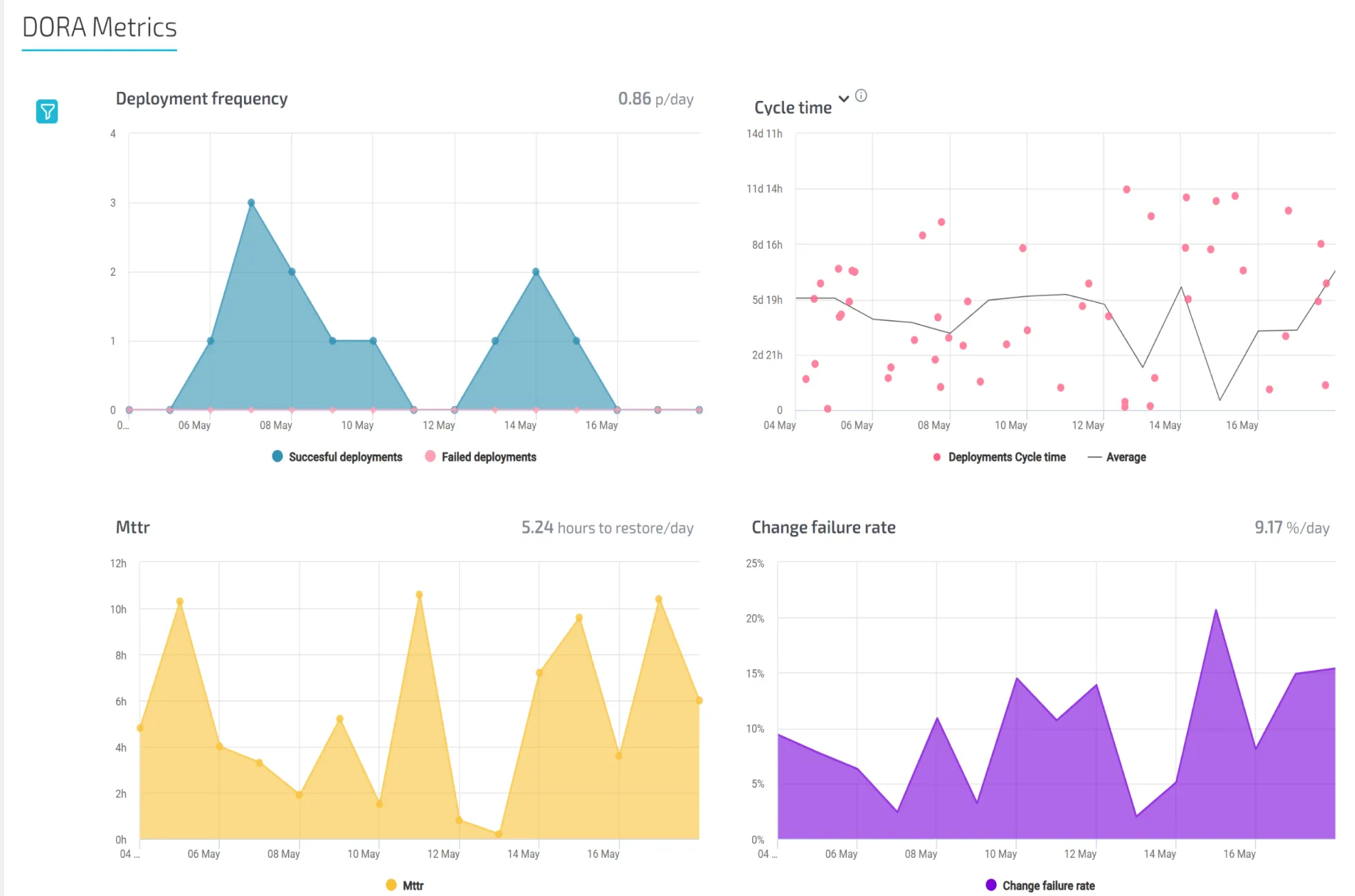
Quality gates: the numbers an SLA is written in
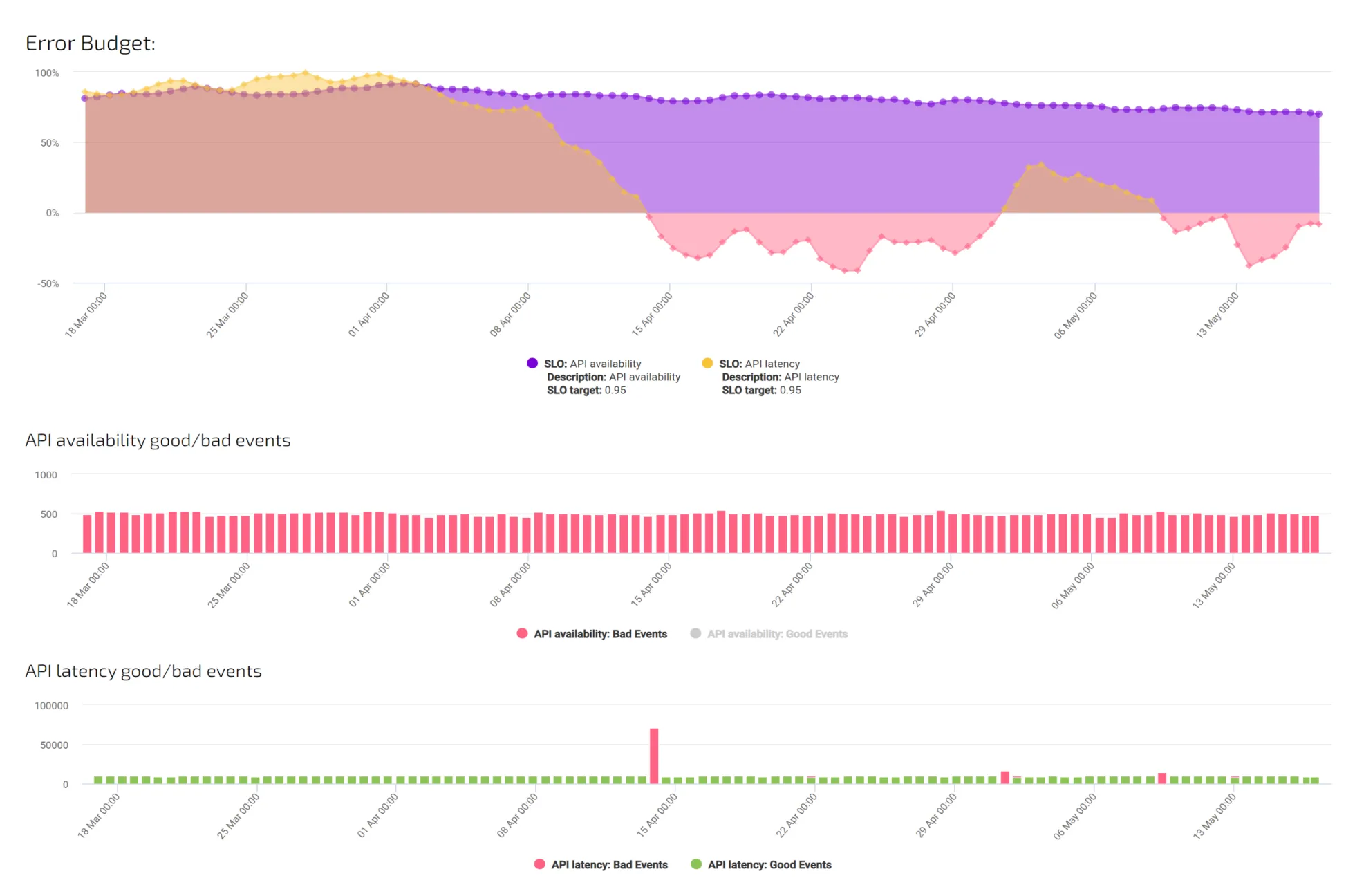
Change failure rate, MTTR and Error Budgets per service — the vocabulary of a client SLA, measured from your deploys and monitoring rather than asserted.
Features versus maintenance, sprint by sprint
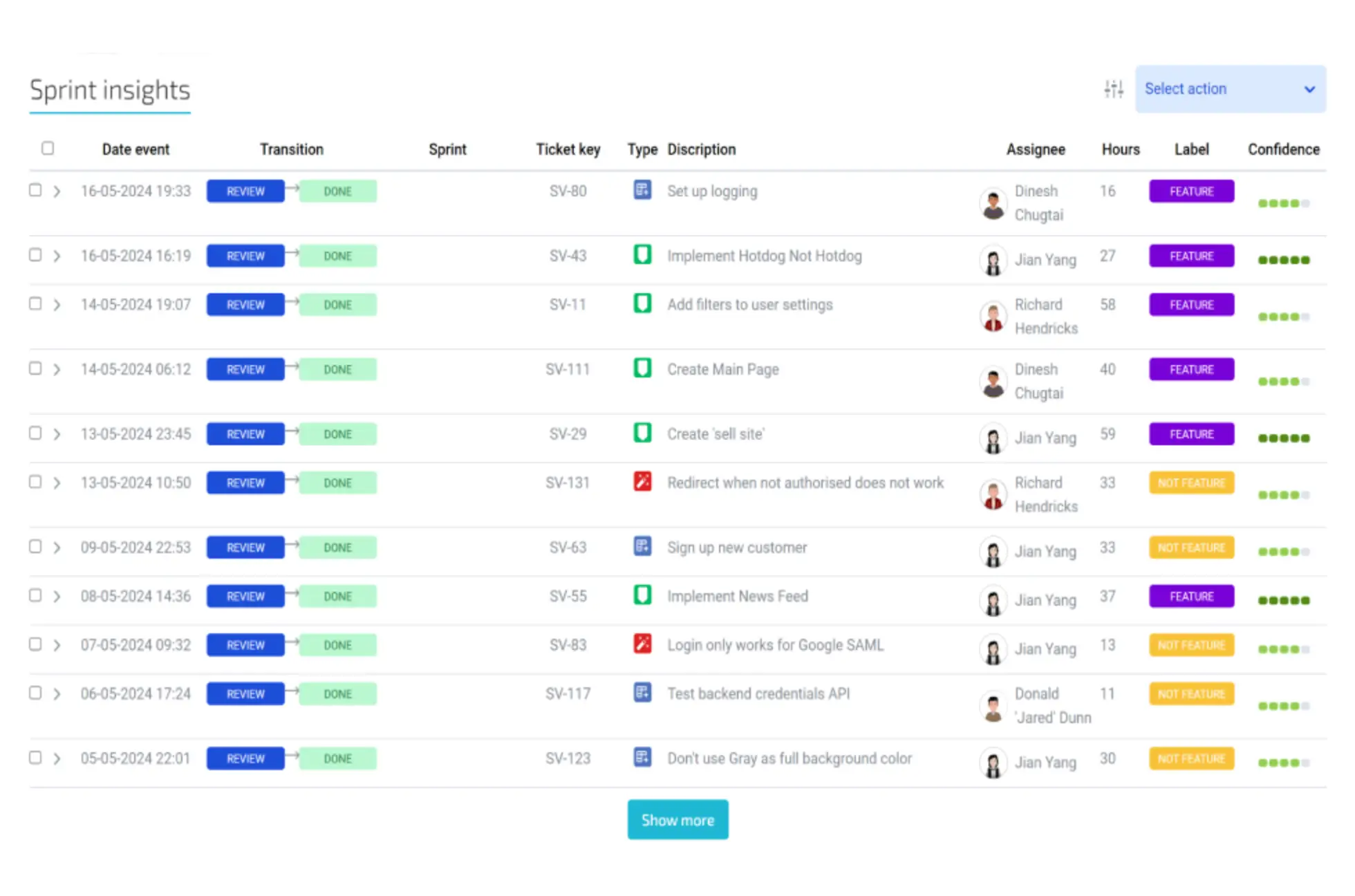
Sprint Insights classifies every ticket as feature or non-feature work, so the hours a client pays for are visible as features shipped rather than tickets closed. Kudos keeps recognition visible across projects and teams.
How it works across your projects
No new process for your teams, nothing for the client to fill in.
Connect
Access tokens you create and can revoke, for GitHub, GitLab or Bitbucket, Jira and your CI — per project, so a client's repositories stay their own.
Baseline
The first sprint gives each project its starting point: lead time, deployment frequency, change failure rate, the feature-to-maintenance ratio.
Report
A sprint report per team at the end of every sprint. What you share with a client, and how, is your call.
Scrum Alliance
We thought our bottleneck was deployment speed. It turned out to be handovers.
Questions software companies ask us
Can we run it per client or per project?
Yes. Repositories, Jira projects and services are grouped into teams, and every metric is measured and reported per team. A client project can be its own team.
Does it rank our developers?
No. Everything is measured on the system — a team, a service, a repository — never on an individual. That is what keeps engineers on board and what makes the numbers defensible in front of a client.
Does it measure what the AI tools cost?
Yes. The AI Impact page shows adoption per tool, licence and usage cost, and the cost and return in euros per AI-assisted merge request. It sits next to lead time, change failure rate and Error Budgets, which is the comparison a client asks for when AI is part of the bill.
Less guessing. More shipped software.
Measure faster — lead time, review wait and deployment frequency per team, every sprint
Guard quality — change failure rate, MTTR and Error Budgets
Prove the gain — feature work versus maintenance, from your own data
See it in 30 minutes — on your own data, not a slide deck