
Software quality goes beyond functionality. Non-functional aspects like performance, reliability, and security are crucial — and they are exactly where AI-assisted development puts the pressure: DORA's 2025 report ties higher AI adoption to higher delivery instability, and Faros AI measured production incidents per pull request tripling as AI output grew. By leveraging DORA metrics, SRE Error Budgets and Sprint Insights, teams see whether the code that ships faster also holds in production.
DORA Metrics
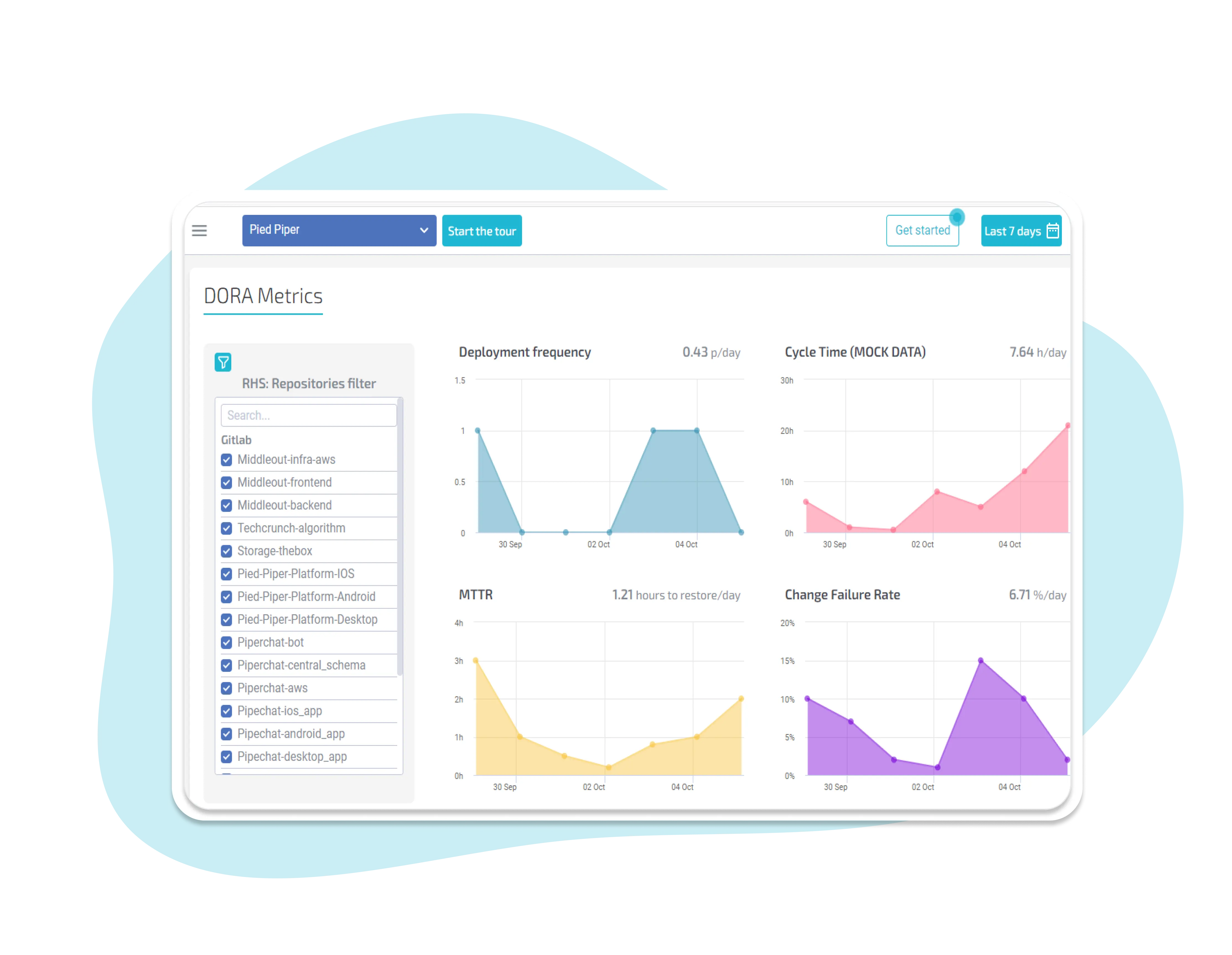
The industry standard DORA (DevOps Research and Assessment) metrics offer a valuable framework for measuring productivity and identifying high-performing teams while considering the quality aspects of software delivery.

What are the DORA Metrics?
Deployment Frequency (DF)
Refers to the frequency of successful software deployments to production. By measuring deployment frequency, the organisation measures the cadence of the deployment work.
Lead Time for Changes (LT)
Captures the time between a code change commit and its deployable state. This metric is critical for determining the flow of work.
Mean Time to Recovery (MTTR)
Measures the time between an interruption due to deployment or system failure and full recovery.
Change Failure Rate (CFR)
Indicates how often a team’s changes or hotfixes lead to failures. This metric indicates the defects that occur when developing software.
DORA metrics enable the measurement of team productivity through quantitative indicators like Deployment Frequency and Lead Time for Changes. These metrics allow organisations to track and compare productivity levels, identify bottlenecks, and drive improvement efforts. Additionally, DORA metrics incorporate quality aspects through Mean Time to Recover and Change Failure Rate, ensuring that productivity gains are achieved without compromising software quality. By including these quality metrics, organisations can identify high-performing teams that consistently deliver value while upholding high-quality standards.
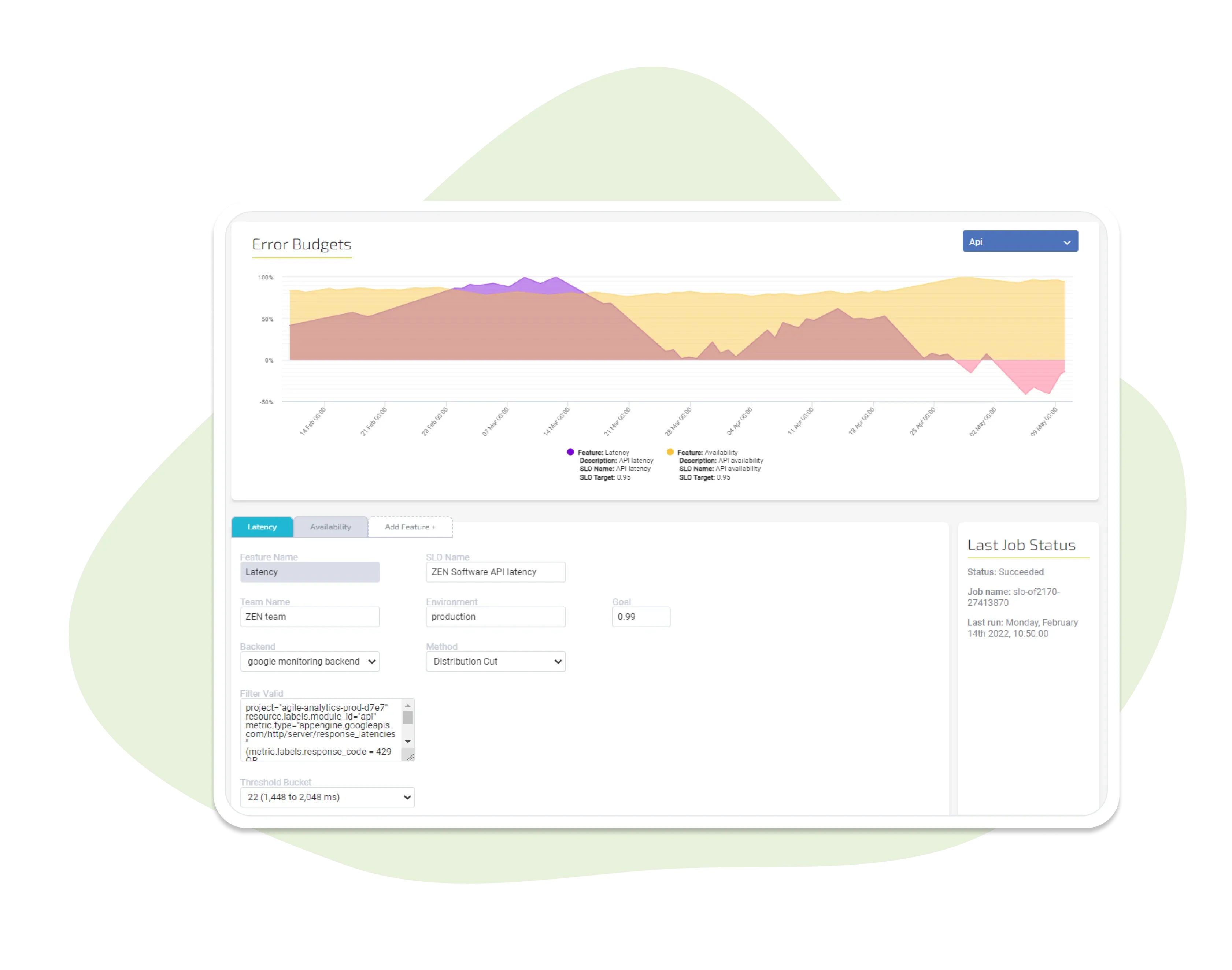
Error Budgets
Setting up the process of Error Budgets empowers your teams by granting them increased autonomy in decision-making regarding feature development and quality aspects. Error Budgets provide a defined threshold of acceptable errors or issues in production. By having this framework in place, teams can determine whether they can focus on full-throttle feature development or if attention needs to be given to addressing quality concerns. This approach allows teams to strike a balance between innovation and maintaining high-quality standards, giving them the flexibility to make informed choices and prioritise their efforts effectively.
Sprint Insights
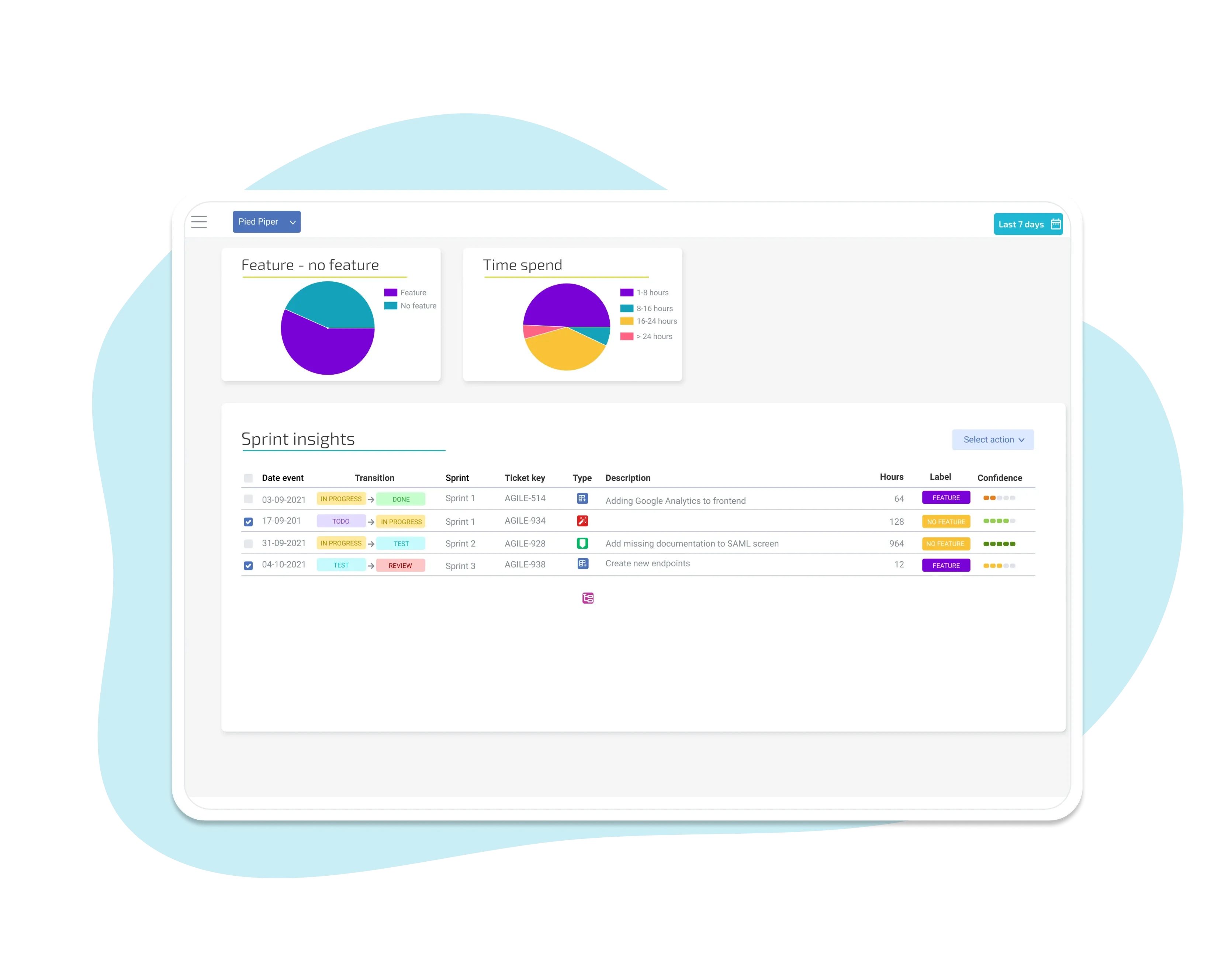
Using Agile Analytics' Sprint Insights, powered by Large Language Models and GPT, teams can gain valuable insights into the distinction between feature development and maintenance/non-feature work. This capability enhances team autonomy by providing objective measures of the time allocated to each type of work. By leveraging advanced natural language processing, the tool can analyse and categorise tasks, allowing teams to understand how their time is being allocated and make data-driven decisions. This knowledge empowers teams to prioritise effectively, optimise resource allocation, and ensure a balanced focus on both feature development and maintenance, ultimately improving productivity and delivery outcomes.
Supercharge your software delivery!
Clear and fair performance data about your software development team
Automated management and measuring of non-functional quality metrics like performance, security and reliability
Make Agile teams happier while increasing engagement and motivation