Struggling with Productivity?
Traditional task management doesn't cut it. Our approach focuses on over 30 research-backed goals proven to enhance productivity. Shift from tasks to meaningful goals and get insights that truly count.
Copilots make the typing faster. DORA's 2025 report found they leave burnout and friction unchanged on their own, and METR's randomised trial found experienced developers 19% slower with early-2025 tools while believing they were 20% faster. The constraints worth attacking are still waiting, interruption and unclear work — and they are measurable.
Move beyond task completion and focus on measurable, impactful goals.
Align your team’s priorities with research-backed productivity goals.
Gain real-time insights into productivity and areas for improvement.

Why most productivity work does not land
Almost every attempt to improve developer productivity starts in the same place: making the writing of code faster. Better tooling, faster machines, fewer meetings for the engineers. Those help, and they are rarely where the time goes.
In most teams, a piece of work spends far more of its life waiting than being worked on — waiting for prioritisation, for a reviewer, for a dependency, for a release window. Speeding up the part that was already fast moves a number that was never the constraint, which is why teams can run a productivity programme for two quarters and hear no difference from the rest of the business.
The three constraints worth attacking
Waiting. The gap between when work is asked for and when it is delivered is mostly queueing. The clearest way to see it is to put cycle time next to lead time: cycle time covers the active work, lead time covers the whole journey, and everything between the two is a queue somebody owns.
Interruption. Deep work does not survive being cut into fifteen-minute pieces, and the cost is invisible in any output count. It shows up as work in progress that never closes, and as the same task appearing in three consecutive stand-ups.
Unclear work. A ticket that starts before anyone agrees what "done" means will be reopened, and the rework rarely gets attributed to the ambiguity that caused it. This is the cheapest of the three to fix and the most often skipped.
Developer Goals with Agile Analytics?
Sustainable and Future-Proof Goals
Whether your team works remotely, embraces AI, or tackles complex projects, our framework focuses on goals that endure—today, tomorrow, and five years from now.
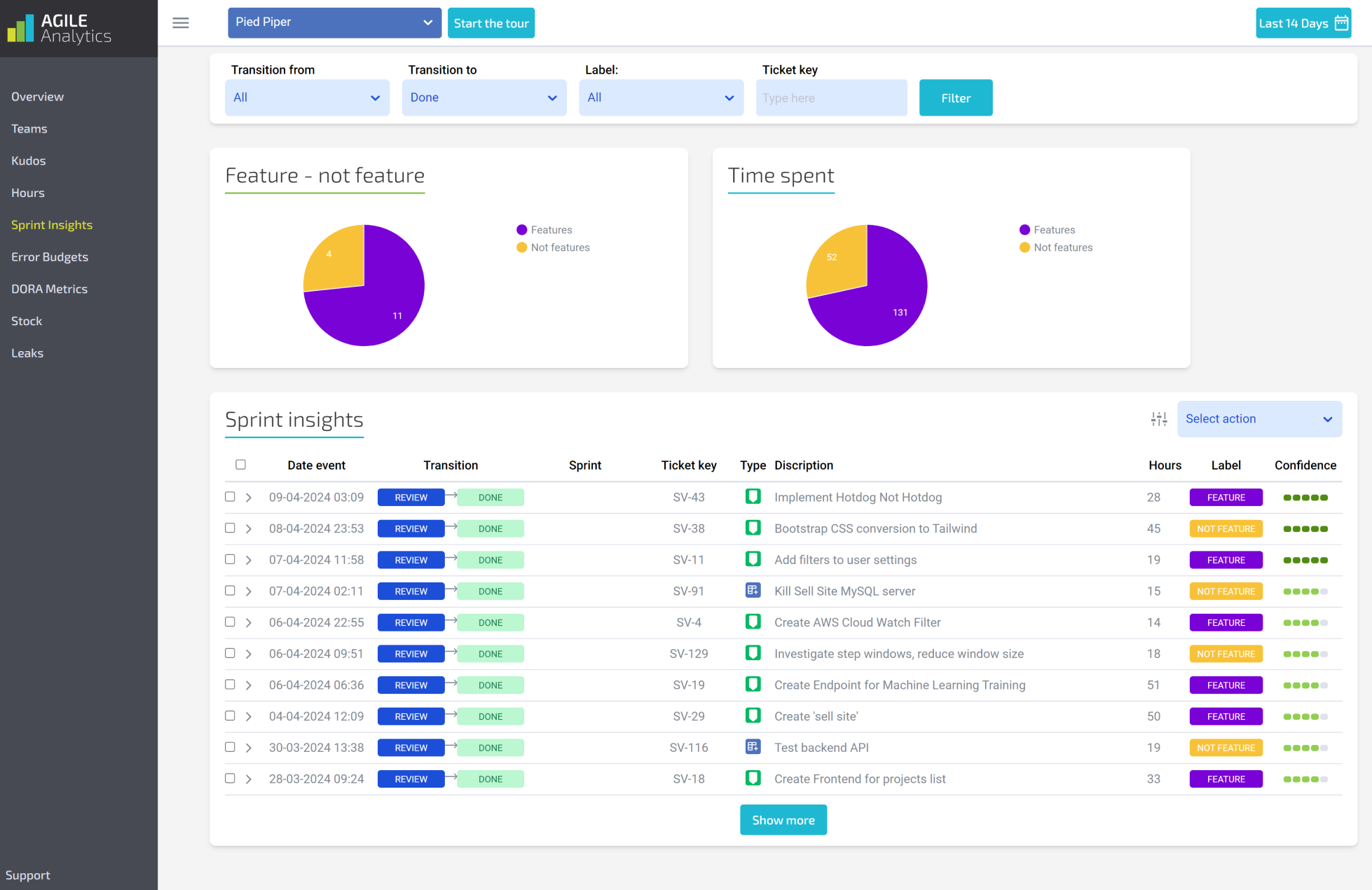
Measure and Improve What Truly Matters
Our coaches help you measure and optimize your developers' experience by tracking key developer journeys.
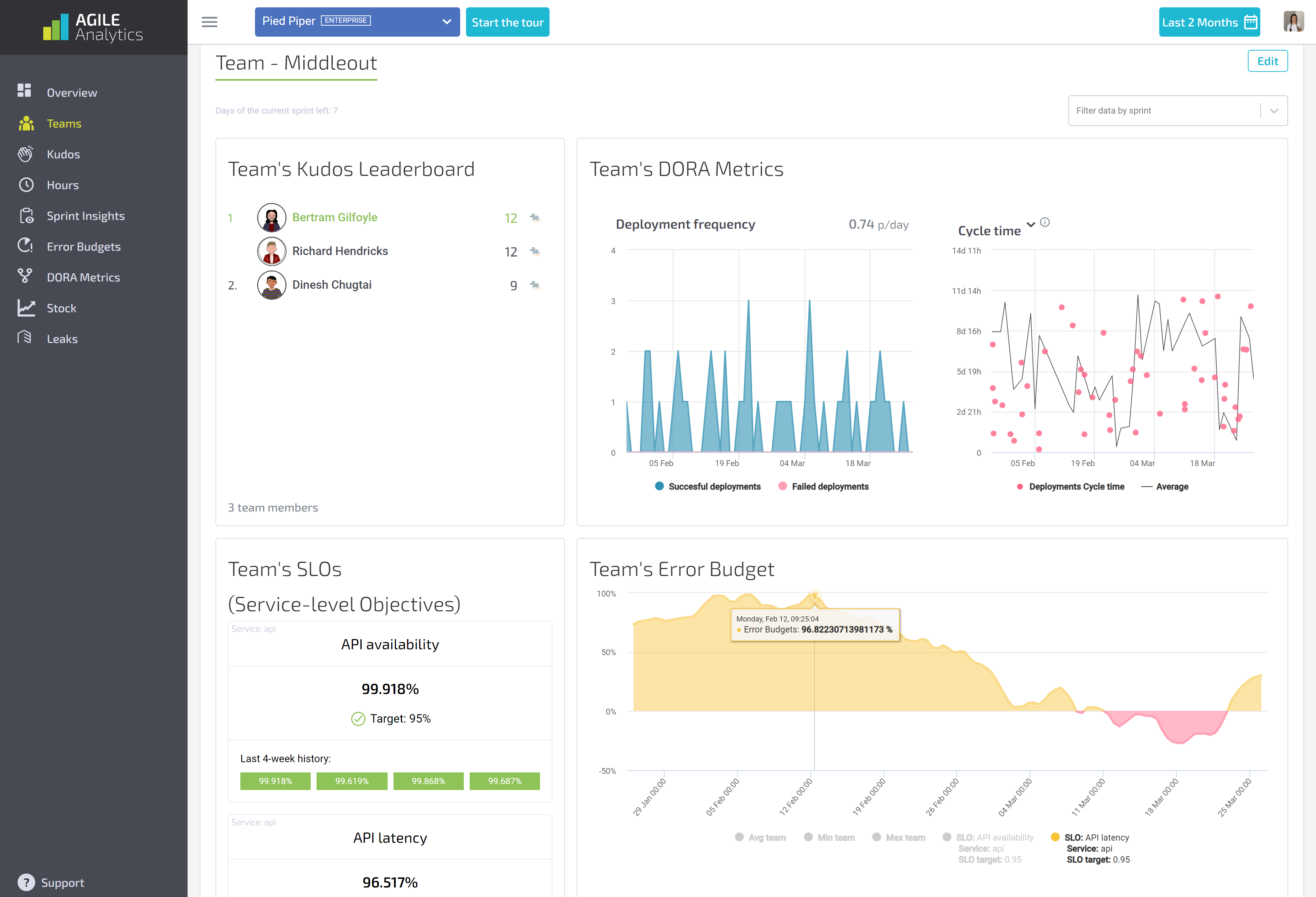
Human-Centered Approach
We place developers at the centre so our strategies make sense to them and are easy to implement. When your team thrives, your business grows.
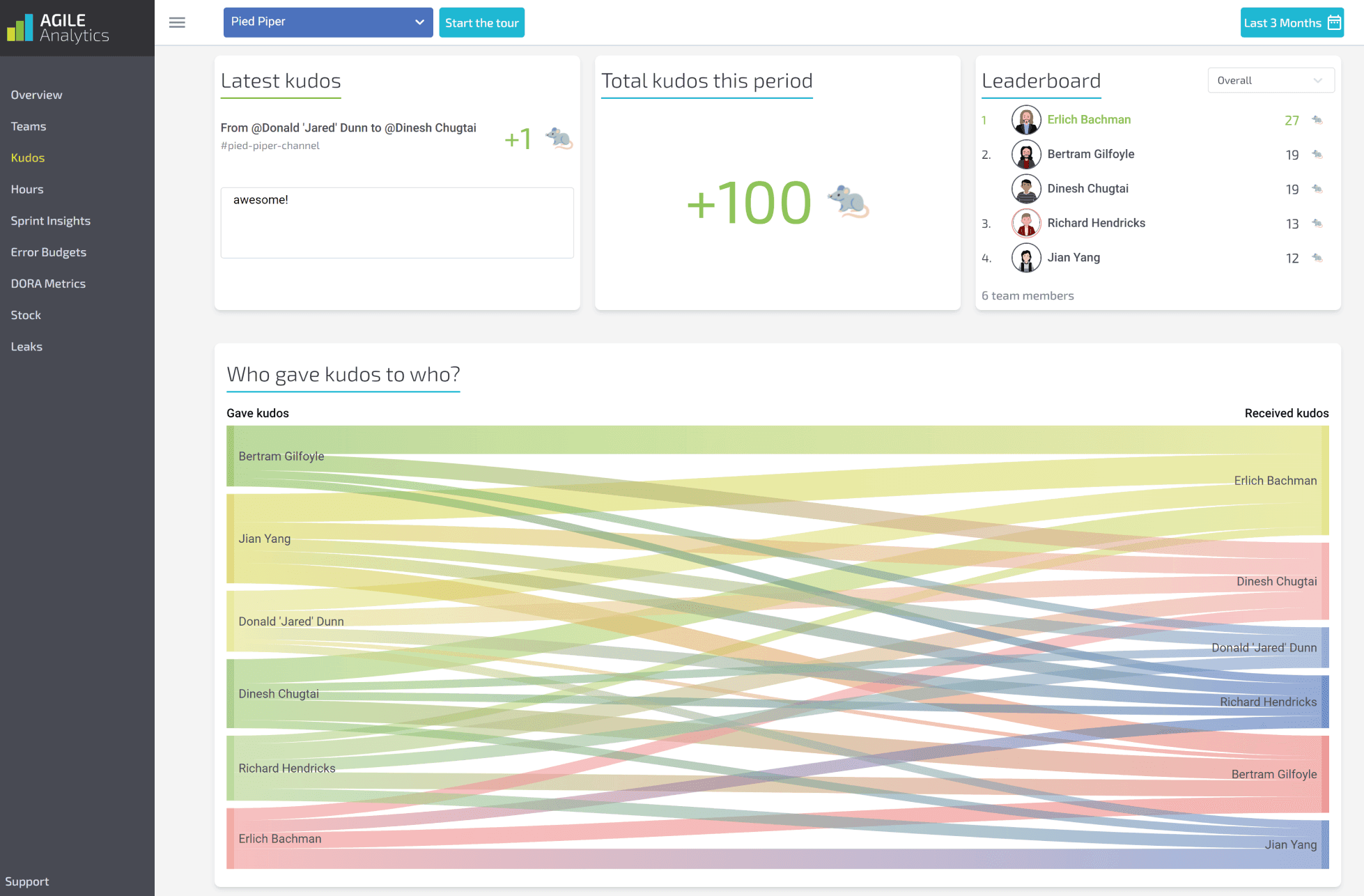
Our approach combines attitudinal insights (how developers feel) with behavioural data (what they do) to give you a complete, real-time insight into productivity and areas for improvement.
Measure the system, not the person
The fastest way to make a productivity programme fail is to measure individuals. Commits, lines of code and story points all describe activity, and activity is the one thing a developer can increase on request without anything improving. Worse, doing so tells the team what you actually value, and they will optimise for it.
Measure the system instead. The DORA metrics describe how changes move from a developer's machine into production — deployment frequency, lead time for changes, change failure rate and time to restore. They are defined, comparable between teams, and derived from tooling you already run rather than from anybody's self-report.
DORA covers delivery, not experience. For the half it leaves out — satisfaction, collaboration, the friction people actually feel — the SPACE framework is the usual complement, and the two answer different questions. Running both is what stops a healthy dashboard from coexisting with a team that is quietly stuck.
What to change first
Pick one queue and shorten it. Find the longest wait between a request arriving and work starting on it, and change the thing that causes it — usually the cadence of prioritisation, not the speed of anyone's typing.
Take the timestamps from the systems of record. Pull them from the issue tracker and the deployment pipeline rather than from a status somebody sets by hand. A metric a person can set is a metric that drifts.
Ask the team, on a schedule. Developer experience data is the only source for the friction that no system logs, and one recurring question reported next to the delivery numbers is worth more than a dashboard nobody trusts.
Report the pair, not the average. A median with a long tail is a different problem from a slow middle, and the two need different fixes.
Less guessing. More shipped software.
Measure faster — lead time, review wait and deployment frequency per team, every sprint
Guard quality — change failure rate, MTTR and Error Budgets
Prove the gain — feature work versus maintenance, from your own data
See it in 30 minutes — on your own data, not a slide deck