Platform Engineering: Treating Your Platform Like a Product

Published on 30 April 2026 by Zoia Baletska
For a long time, internal platforms were treated as infrastructure. Something you built once, maintained quietly, and expected teams to adapt to. If things worked, nobody noticed. If they didn’t, developers found workarounds.
That model doesn’t hold up anymore.
As systems grow more complex and teams become more independent, the platform itself starts shaping how quickly software can be delivered, how reliably it runs, and how much cognitive load teams carry. At that point, the platform stops being a backend concern and becomes part of the developer experience.
That’s where platform engineering comes in—and why more organisations are starting to treat their platform as a product rather than a collection of tools.
What Platform Engineering Actually Means
Platform engineering is often described as “building internal developer platforms.” That’s accurate, but incomplete.
In practice, it’s about creating a layer between infrastructure and product teams that makes common tasks easier, safer, and more consistent. Instead of every team solving the same problems—deployments, observability, environment setup—the platform provides a shared way of doing those things.
This usually includes:
-
Deployment pipelines
-
Infrastructure provisioning
-
Observability and monitoring
-
Access control and security guardrails
-
Templates for services and environments
But the real shift is not in what is built. It’s in how it is approached.
Why “Platform as a Product” Changes the Game
When platforms are treated as internal infrastructure, success is often measured by technical completeness: how many features exist, how flexible the system is, how well it integrates.
From a developer’s perspective, those things matter less than usability.
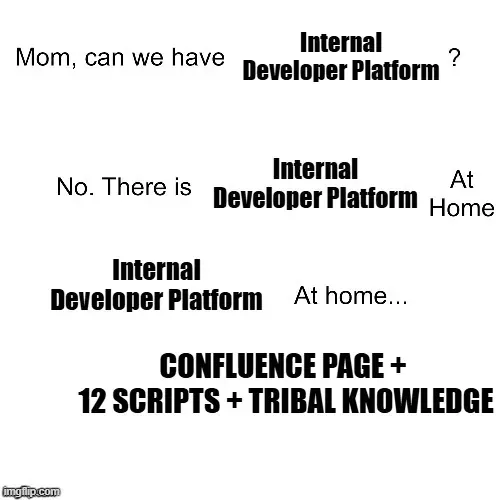
A platform that supports every possible configuration but takes days to understand will be avoided. Teams will bypass it, reintroduce inconsistencies, and gradually undo the intended benefits.
Treating the platform as a product changes the focus:
-
Developers become users
-
Adoption becomes a key metric
-
Feedback becomes part of the development cycle
-
Simplicity often beats flexibility
This leads to different decisions. Instead of asking “Can the platform support this use case?”, teams start asking “Should it?” and “How easy is it to use in practice?”
The Core Principles of Platform-as-a-Product
1. Start with Real Developer Problems
Platforms tend to grow from good intentions. A team builds a tool they wish they had, then expands it into something larger.
The risk is building ahead of actual needs.
Strong platform teams stay close to product teams and look for repeated friction:
-
Time spent setting up environments
-
Inconsistent deployment processes
-
Difficulty debugging production issues
-
Manual, error-prone workflows
These patterns are better signals than feature requests.
2. Optimise for the Common Path
One of the hardest trade-offs in platform engineering is between flexibility and simplicity.
If the platform tries to handle every edge case, it becomes complex. If it focuses on the most common scenarios, it becomes easier to adopt.
The most effective platforms make the common path straightforward:
-
Creating a new service should feel routine
-
Deploying changes should not require deep platform knowledge
-
Observability should be available by default
Edge cases can still exist, but they shouldn’t define the experience.
3. Reduce Cognitive Load, Not Just Effort
Automation is often the first goal of platform engineering. It removes manual steps and reduces errors.
But cognitive load is a different problem.
Even if a process is automated, developers still need to understand how it works, when it fails, and how to debug it. A platform that hides too much can become difficult to reason about.
Good platform design finds a balance:
-
Enough abstraction to simplify workflows
-
Enough visibility to understand what’s happening
This is closely tied to developer experience (how easy the daily work of building software is), and it’s one of the areas where platform investments have the biggest long-term impact.
4. Measure Adoption, Not Just Output
A platform that exists but is not used has no real value.
Tracking adoption helps answer important questions:
-
Are teams actually using the platform?
-
Where do they drop off?
-
Which features are ignored?
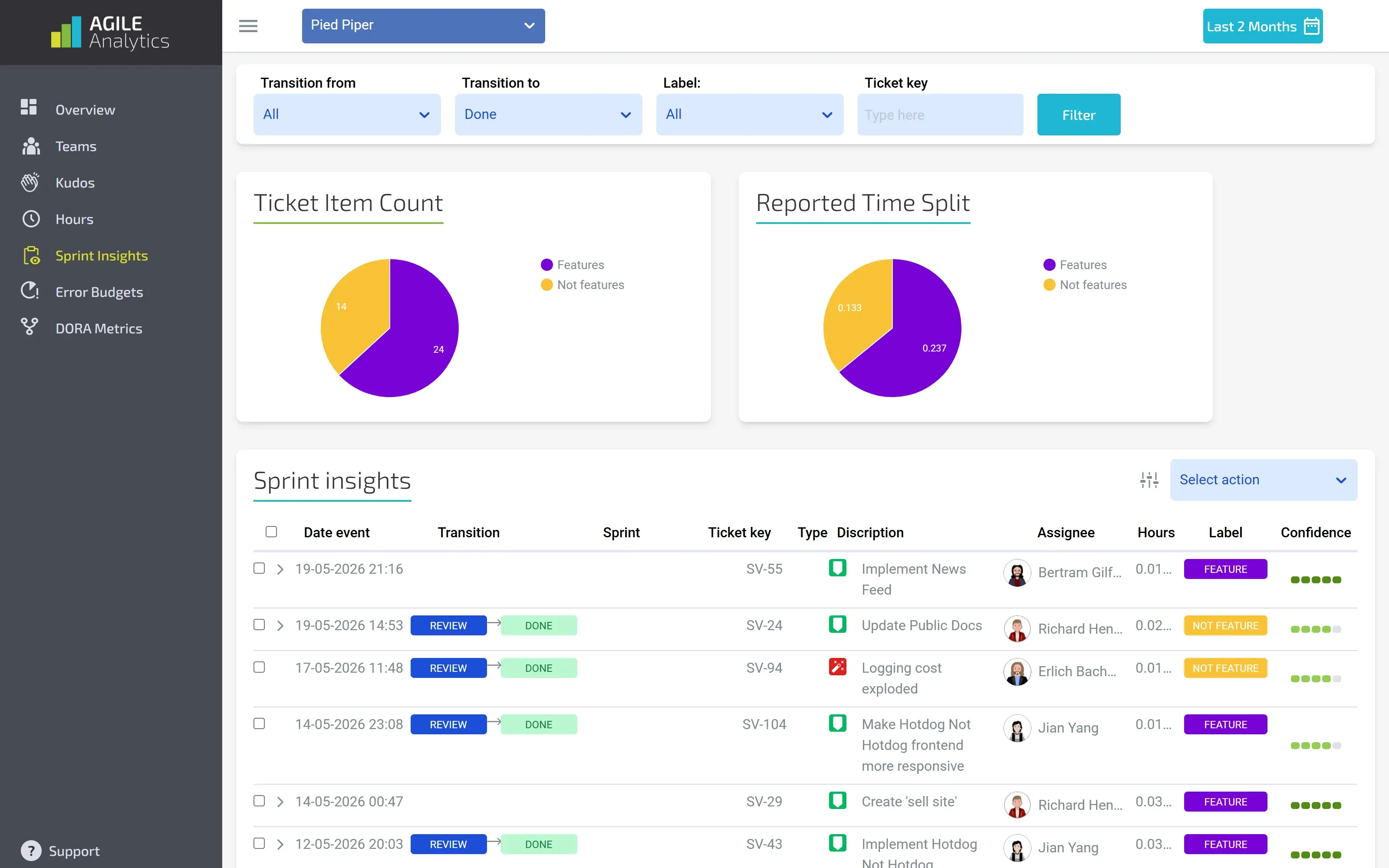
This is where tools like Agile Analytics can provide additional context. By connecting delivery workflows with platform usage patterns, it becomes easier to see whether the platform is improving flow or creating new friction.
Metrics such as lead time (from commit to running in production), deployment frequency (how often code reaches production), and incident rates can reveal whether platform changes are making a difference.
5. Iterate Like a Product Team
Platforms that succeed tend to evolve continuously.
They release improvements incrementally, gather feedback, and adjust based on real usage. Documentation improves over time. Interfaces become simpler. Unused features are removed.
This is very different from the “build once and maintain” mindset.
It also means platform teams need similar capabilities to product teams:
-
Roadmaps
-
User research
-
Prioritisation based on impact
-
Clear ownership
Where Platform Engineering Fits in the Bigger Picture
Platform engineering often appears alongside shifts in how organisations approach reliability and delivery.
In smaller setups, teams rely more on embedded expertise—someone helping directly with infrastructure or reliability. As systems grow, that approach becomes harder to scale. The platform starts to take over part of that role, providing reusable solutions instead of one-off fixes.
This doesn’t replace other models entirely. It complements them.
Embedded SREs, for example, often surface recurring issues that can be solved at the platform level. Over time, the platform absorbs those solutions, reducing the need for repeated intervention.
Common Pitfalls
Treating the platform as a product does not automatically solve everything. There are a few patterns that tend to cause trouble:
-
Overengineering early. Building a comprehensive platform before understanding real needs often leads to low adoption.
-
Ignoring feedback loops. Without continuous input from developers, platforms drift away from actual workflows.
-
Measuring success by features delivered. More functionality does not always translate into better outcomes.
-
Creating hidden complexity. Abstracting too much can make systems harder to debug and trust.
What “Good” Looks Like
A well-functioning platform is not necessarily the most powerful or the most flexible.
It is the one team that relies on without thinking too much about it.
-
New services follow consistent patterns
-
Deployments feel predictable
-
Observability is built in, not added later
-
Teams spend less time on setup and more time on solving domain problems
In those environments, delivery tends to become more stable and less dependent on individual expertise.
Final Thought
Platform engineering is often framed as a technical discipline, but its impact is largely organisational.
It shapes how teams work, how quickly they can move, and how much friction they experience along the way.
Treating the platform as a product doesn’t guarantee success, but it changes the direction. It shifts attention toward usability, adoption, and real-world impact — the things that ultimately determine whether a platform helps or gets in the way.
Less guessing. More shipped software.
Measure faster — lead time, review wait and deployment frequency per team, every sprint
Guard quality — change failure rate, MTTR and Error Budgets
Prove the gain — feature work versus maintenance, from your own data
See it in 30 minutes — on your own data, not a slide deck