Features vs Non-Features Ratio: Understanding Your “Thinking Pies”

Published on 5 March 2026 by Zoia Baletska
In software development, not all work is created equal. Some tasks directly contribute to product functionality that delivers value to users — we call these features. Other work, while essential, falls outside this scope: bug fixes, refactoring, tech debt cleanup, operational tasks, or internal tooling. These are non-features.
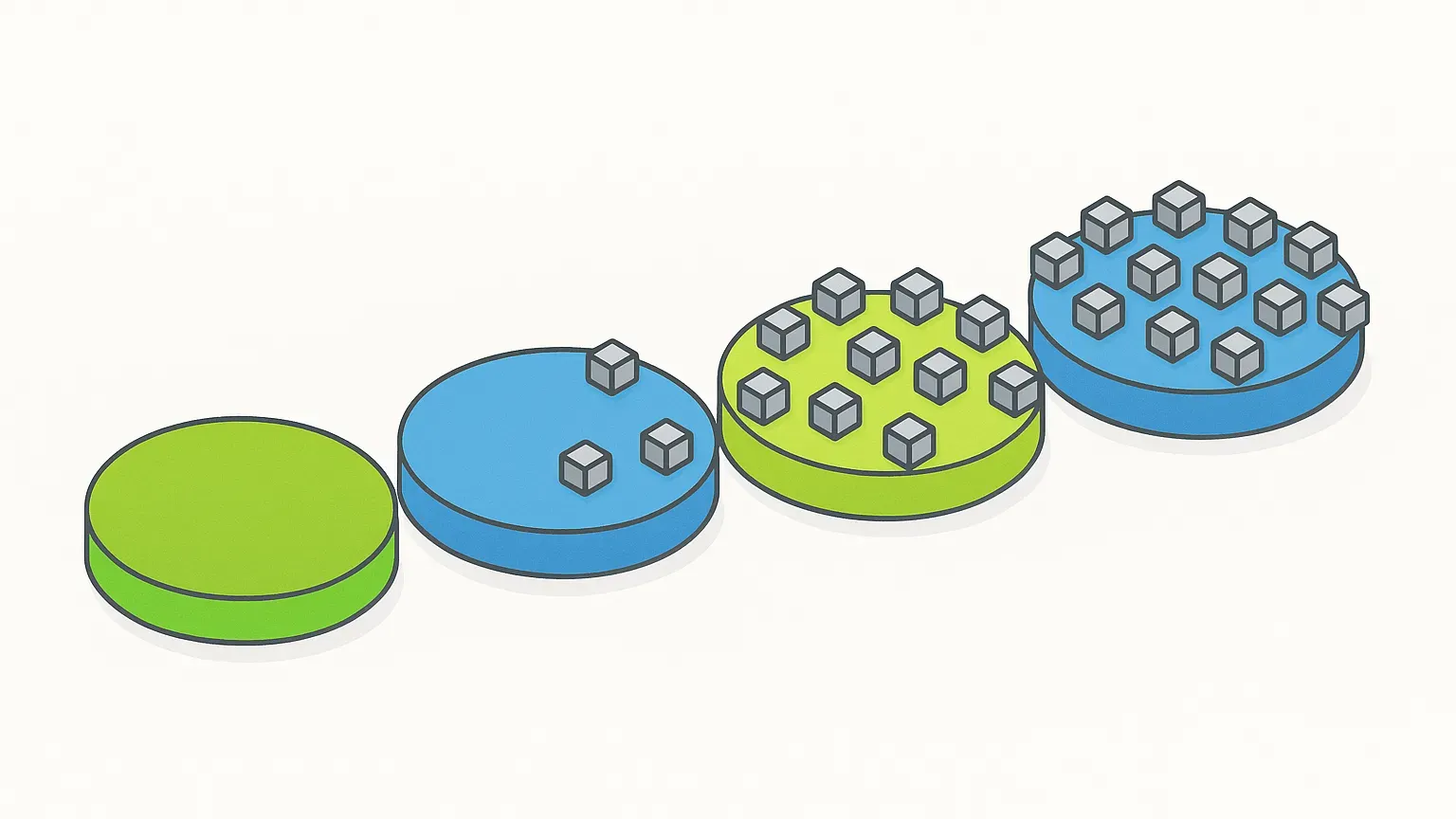
The ratio of features to non-features — the features/non-features ratio, or what we sometimes call the “thinking pies” — can be surprisingly telling about how your team is spending its cognitive and operational bandwidth.
Why the Features/Non-Features Ratio Matters
A high proportion of non-feature work can signal several things:
-
Technical debt accumulation: Teams may be constantly firefighting issues instead of delivering new capabilities.
-
Inefficient prioritisation: Product planning may be overburdened by maintenance tasks or operational overhead.
-
Team capacity stress: Developers may feel they are “spinning wheels” without creating tangible user value.
Conversely, an unusually high feature ratio isn’t automatically good. It could indicate:
-
Underreported non-feature work (bugs, infrastructure, etc.)
-
Ignored technical debt, which can cause bigger problems later
-
Misclassification of tasks
Understanding the ratio gives teams a pulse on where mental energy and resources are going, and whether the balance aligns with product and business goals.
When to Pay Attention
You should pay attention to the features/non-features ratio in the following cases:
-
During product planning cycles, ensure that the delivery focus isn’t skewed toward maintenance or internal work.
-
After spikes in tech debt, a sudden shift to mostly non-feature tickets can indicate backlog debt affecting throughput.
-
When onboarding new teams or tools, new developers or processes may initially generate a skewed ratio that needs monitoring.
-
Before releasing OKRs or KPIs: The ratio helps interpret what the team is truly delivering versus maintaining.
In short, tracking the ratio is most useful when assessing productivity, cognitive load, and alignment with strategic goals.
What It Can Signal
The features/non-features ratio is more than a number. Depending on trends, it can signal:
-
High non-feature ratio: Technical debt, over-maintenance, operational overload
-
High feature ratio: Healthy product delivery — or underreported maintenance
-
Shifts over time: Changes in priorities, onboarding impacts, or AI tool adoption influencing task classification
By tracking trends over weeks or months, teams can spot patterns early and take corrective action, such as reprioritising backlog, refactoring critical components, or adjusting resource allocation.
How to Track It: Agile Analytics approach
Tracking features vs non-features can be done manually, but automated tools make it scalable and insightful.
-
Ticket system integration: When your ticketing system (Jira, GitHub Issues, etc.) is connected, Agile Analytics can analyse each ticket.
-
AI-based classification: Our system learns to distinguish feature tickets from non-features automatically. It looks at ticket descriptions, labels, history, and context to classify intelligently.
-
Manual correction and training: You can assign tickets manually if the AI misclassifies. Each correction trains the system, improving accuracy over time.
-
Dashboard trends: Visualise weekly or monthly ratios, spot shifts, and correlate with throughput, defect rates, or sprint velocity.
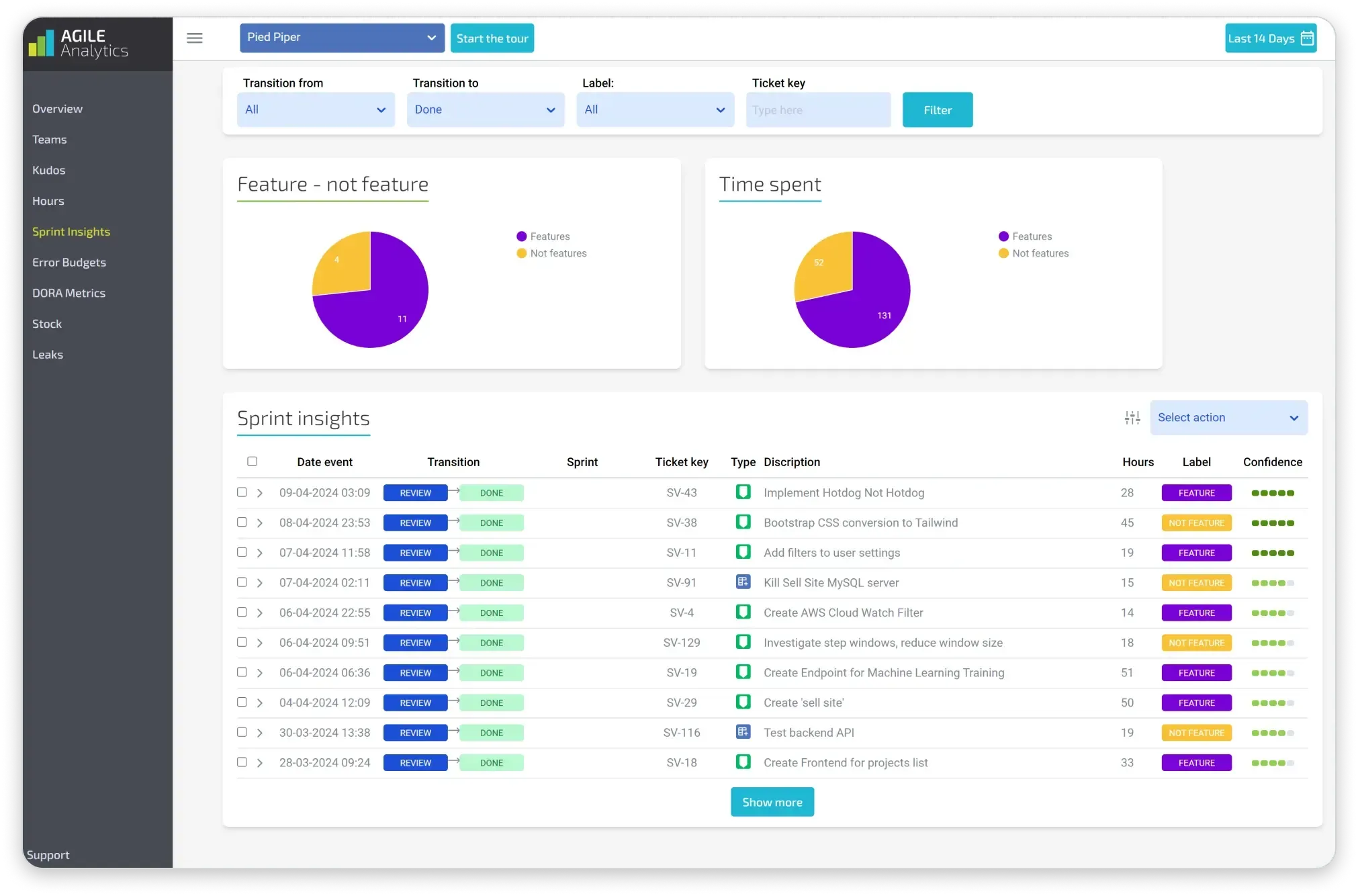
This combination of AI learning and human oversight ensures that the features/non-features ratio is reliable and actionable. Teams can see at a glance whether most cognitive energy is spent building new value or maintaining existing systems.
Making the Most of the Data
Once tracked, the features/non-features ratio can inform decisions such as:
-
Sprint planning: Adjust commitments to balance new features and maintenance work.
-
Resource allocation: Assign engineers to areas that align with strategic priorities.
-
Risk assessment: Identify areas where technical debt may be silently accumulating.
-
Developer experience: Monitor cognitive load — a team focused too heavily on non-features may feel stalled or frustrated.
By making this ratio visible and actionable, teams move from reactive work to strategically guided development.
Less guessing. More shipped software.
Measure faster — lead time, review wait and deployment frequency per team, every sprint
Guard quality — change failure rate, MTTR and Error Budgets
Prove the gain — feature work versus maintenance, from your own data
See it in 30 minutes — on your own data, not a slide deck