Psychological Safety Is an Engineering Metric — Here’s the Proof

Published on 4 December 2025 by Zoia Baletska
Most Agile teams obsess over velocity (story points completed per sprint), burndown charts, sprint goals, ceremonies, tooling, and frameworks. Yet a quiet story that recently surfaced on Reddit reveals something far more fundamental:
“Agile doesn’t break when the process is wrong. It breaks when people feel like they can’t be honest.”
In the post, a team looked perfect from the outside—standups were quick, the board was active, and everyone confidently nodded through planning. It seemed efficient.
But inside the sprint? Everything was falling apart. Tasks slipped. PRs stagnated. Work stretched far beyond estimates. And every standup sounded like a broken record: Still working on it. No blockers.
Except everyone was blocked. They were all stuck, all struggling, but too afraid to be the one to say it first. When they finally stopped mid-sprint to talk honestly, the truth spilled out in minutes: every single developer had silently struggled for days.
The sprint didn’t collapse due to complexity, tools, or strategy. It collapsed because the team lost the ability to admit uncertainty. And that failure mode isn’t rare — it’s systemic. This isn’t a culture story. It’s an engineering constraints story. Because the moment psychological safety disappears, your data, processes, and delivery pipeline become fiction.
Below is a deeper look at why that happens — and how to detect it before it destroys a sprint.
Why Psychological Safety = Engineering Performance
We like to imagine software development as a purely technical discipline. But every flow metric we track — lead time, cycle time (from first commit to merged), PR throughput (items finished per week), defect rates — ultimately reflects human behaviour.
And psychological safety is one of the strongest predictors of that behaviour.
When psychological safety is high → Developers ask questions early, collaborate openly, surface risks, and validate assumptions before spending time going in the wrong direction.
When psychological safety is low → Developers hide confusion, avoid asking for help, overestimate progress, and isolate themselves to avoid appearing “slow.”
And that directly impacts measurable outcomes. Here’s how.
The Measurable Symptoms of Low Psychological Safety
1. Task Ageing Quietly Spikes
You’ll see cards that haven’t been touched in 2, 3, or even 5 days. Nobody says they’re stuck — but the board says otherwise.
This is the most common early warning of psychological safety degradation:
-
Cards frozen in “In Progress”
-
No comments
-
No check-ins
-
Standups still sound normal
Teams often mistake this for “deep focus.” In reality, it’s a silent cry for help.
2. PR Latency Balloons
A developer who doesn’t feel safe showing imperfect work… delays opening the PR (a proposed code change awaiting review). And reviewers who don’t feel safe asking questions… delay approving the PR.
What looks like a “busy week” is often emotional bottlenecking:
-
PR sits unreviewed for days
-
Reviewer says “Looks good!” despite doubts
-
The developer avoids revising because the critique feels threatening
Psychological friction becomes pipeline friction.
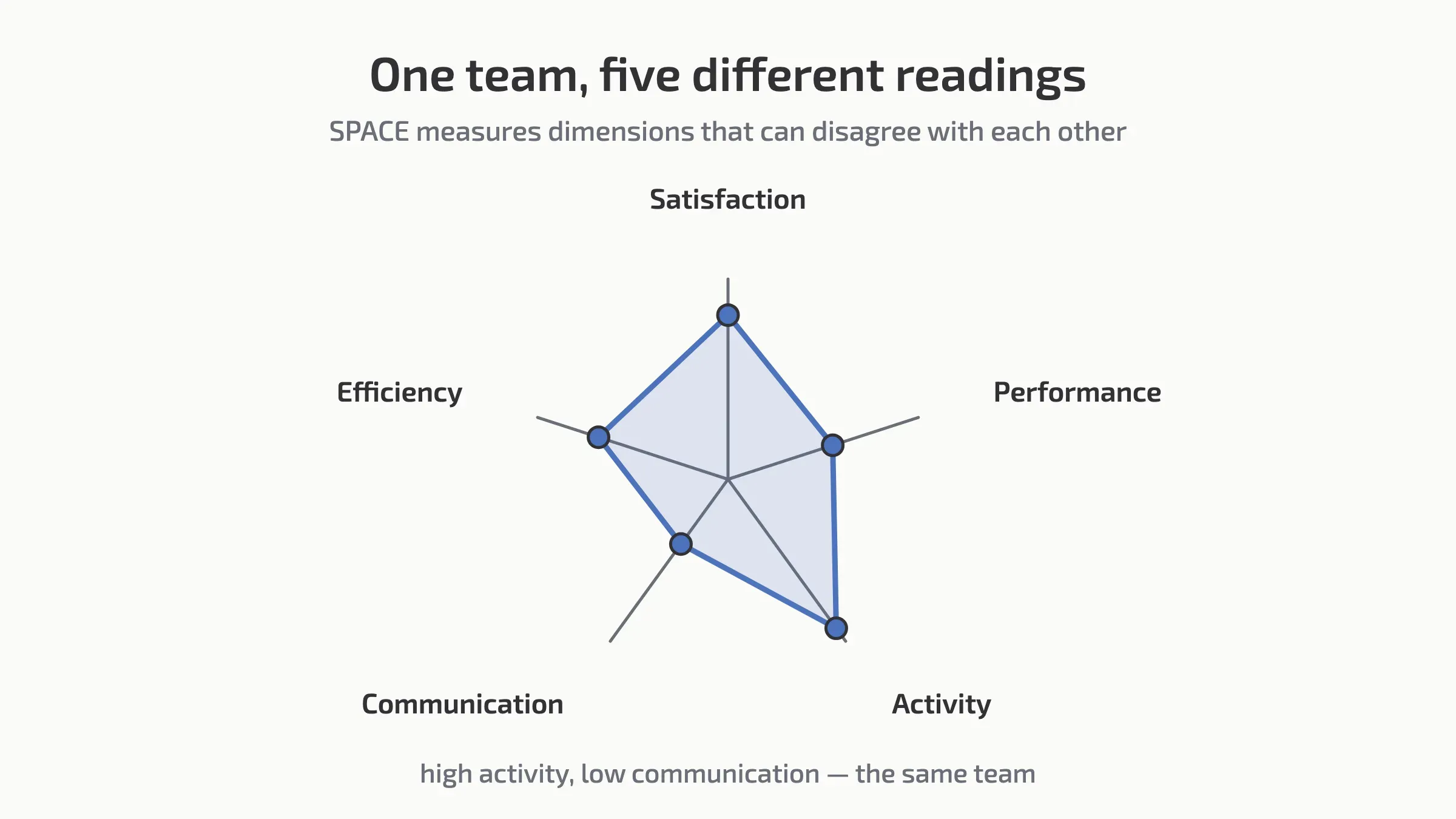
3. Collaboration Density Drops
When teams withdraw, you see it in the data:
-
fewer comments in PRs
-
fewer clarifying questions
-
short or vague Slack messages
-
limited design discussion
-
increase in DMs (fear of public scrutiny)
This is not just a decline in culture — it’s a breakdown in shared problem-solving.
4. Higher Rework & More Micro-Defects
Developers working in isolation often take the wrong path early — and the fix requires rework. This happens especially when:
-
a developer misunderstands a requirement but doesn’t confirm
-
a junior struggles but doesn’t ask
-
someone avoids surfacing uncertainty
More psychological debt → more technical debt (shortcuts in the code that cost time later).
5. Burnout Camouflaged as “Quiet Productivity”
A developer silently suffering through blockers may look focused… until the sprint ends and the consequences surface:
-
missed deadlines
-
rising frustration
-
increased sick leave
-
emotional exhaustion
-
turnover signals
When safety collapses, burnout isn’t far behind.
Why Standups Often Fail to Detect Real Blockers
Standups are supposed to catch blockers early. But they often do the opposite. The problem? Standups are social events — and social dynamics override process.
Developers fear: appearing incompetent, being the slowest, asking “stupid questions”, disappointing the PM and being judged in front of peers. So they use phrases like: “Almost done”, “Wrapping up”, “No blockers” and “Just finishing some polishing.”These become defensive shields, not status updates.
The result: the entire Agile system loses its ability to react in time. Agile doesn’t fail from bad planning. It fails due to blocked information flow.
How to Measure Psychological Safety (Using Real Data)
Psychological safety used to be treated as an intangible concept. But modern teams can measure leading indicators directly from engineering activity. Tools like Agile Analytics make these patterns visible by tracking:
-
Stalled work and WIP (work in progress) ageing: Tasks stagnating in mid-flow are early red flags.
-
PR collaboration patterns: Low review comments = low engagement or fear of critique.
-
Slack sentiment analysis: Short, clipped, hesitant messages = discomfort.
-
Cross-team interaction patterns: Reduced pairing or discussion = avoidance.
-
Survey AI insights: Anonymous team input reveals fears people won’t say aloud.
With the right visibility, psychological safety becomes measurable, trackable and improvable. Instead of a vague “cultural issue,” it becomes an operational variable.
Practical Strategies to Rebuild Psychological Safety
If you’re seeing signs of quiet blockers, here’s how to turn things around.
-
Normalise “I’m stuck” as a sign of maturity. Teams improve when “I need help” is treated as leadership, not weakness.
-
Shift from blame to collaboration. Replace: “Why is this not done?” with “Who can help accelerate this?”
-
Introduce async check-ins. Some engineers communicate more honestly in writing. Daily async blockers → fewer social dynamics.
-
Use tooling to catch silent blockers. Let dashboards flag stagnation automatically. Don’t wait for standups.
-
De-risk transparency during retros (the team’s end-of-sprint review of how it worked). Ask:
-
When did we hesitate to say we were stuck?
-
Where did we pretend to understand something?
-
Where did we struggle alone?
-
This is where real transformation happens.
-
Connect psychological safety to delivery performance. Show teams the data:
-
how safety impacts cycle times
-
how blockers affect PR flow
-
how delayed communication slows shipping
-
This makes culture measurable and results-driven.
Final Thoughts
Psychological safety isn’t a nice-to-have. It’s not a soft skill. It’s not a culture perk. It is one of the core engineering metrics that determines:
-
how fast your team ships
-
how reliably they deliver
-
how often they rework
-
how much they collaborate
-
how burned out they become
The Reddit story is a perfect reminder:
One person afraid to admit a blocker can quietly block the entire team.
Modern engineering organisations can — and must — measure these human signals. Because once you see them clearly, you can fix them quickly.
And when you fix psychological safety, you fix everything else.

Less guessing. More shipped software.
Measure faster — lead time, review wait and deployment frequency per team, every sprint
Guard quality — change failure rate, MTTR and Error Budgets
Prove the gain — feature work versus maintenance, from your own data
See it in 30 minutes — on your own data, not a slide deck